Beyond Stamp Cards: AI-Driven Customer Loyalty for Malaysian Businesses
A stamp card tells you nothing. An AI-driven loyalty system predicts which customers are about to leave — before they do. Exploring what intelligent loyalty looks like.
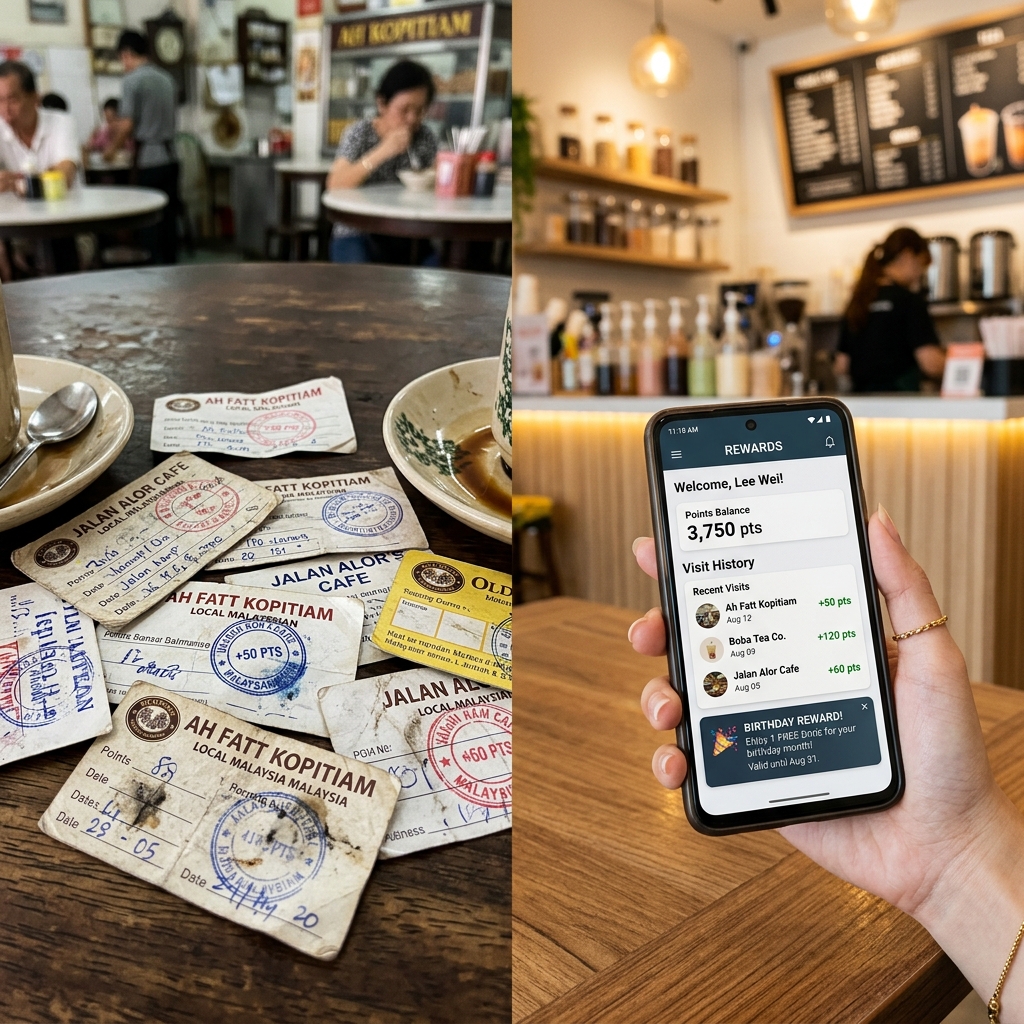
🌟 500 Lost Stamp Cards
Ah Huat runs a popular nasi lemak stall in PJ. Three years ago, he printed 1,000 stamp cards — "Buy 10, Get 1 Free." Seemed like a great idea.
Three years later: 500+ cards were lost or forgotten. Customers would say: "I left my card at home la." Staff would stamp the wrong card. Some customers figured out you could stamp it yourself with any round object. And Ah Huat had zero data about who his best customers were.
The Bubble Tea Shop Next Door
Then his neighbor — a bubble tea shop — switched to a WhatsApp-based loyalty system. No cards. Customers just give their phone number. The system tracks everything automatically. Within 3 months, their repeat visit rate went up 30%.
Ah Huat's reaction: "Wah, I've been doing loyalty wrong all along."
📚 Why Stamp Cards Don't Actually Build Loyalty
The purpose of a loyalty program isn't the free item — it's the relationship data. A stamp card gives you:
- • No idea who used it
- • No visit frequency data
- • No spending patterns
- • No way to contact them
- • No idea who stopped coming
- • Easy to cheat or lose
- • Customer name and phone number
- • Visit frequency and recency
- • Average spend per visit
- • Direct communication channel
- • Churn alerts (who stopped coming)
- • Impossible to fake
It’s Not About the Free Item
The real power of AI-driven loyalty isn't the reward — it's knowing who your VIP customers are and being able to talk to them directly.
📈 The Numbers That Change Everything
Here's what most bosses don't realize about customer retention:
- Getting a new customer costs 5-7x more than keeping an existing one.
- A 5% increase in retention can increase profits by 25-95%.
- Repeat customers spend 67% more than new customers on average.
Stamp Cards vs Smart Loyalty
Your stamp card isn't building loyalty — it's giving away free food to people who would have come anyway. A AI-powered system does something fundamentally different: it identifies customers who are about to stop coming and gives you a chance to bring them back.
Imagine getting an alert: "Sarah used to come every Tuesday. She hasn't visited in 3 weeks." You send her a WhatsApp: "Hi Sarah! We miss you — here's 20% off your next visit." That's a customer saved. A stamp card would never tell you that.
🔧 What Modern Loyalty Looks Like
Smart Loyalty in Action
⚡ Start Simple, This Week
Your 4-Step Transition
- Step 1: Start collecting phone numbers. Even a simple Google Sheet is better than nothing. Ask every customer: "Can I save your number for our loyalty program?"
- Step 2: Track visits manually for 2 weeks. Just note who comes and how often. You'll be shocked at the patterns you discover.
- Step 3: Send your first "We miss you" message to 5 customers who haven't come in a while. See what happens.
- Step 4: Explore AI-driven loyalty tools when you're ready — there are options for every budget.
🏆 What Businesses See After Switching
A stamp card is a cost. A AI-driven loyalty system is an investment that pays for itself every month. The question isn't whether to switch — it's how long you keep paying for free food without knowing who's eating it.
Have ideas about building customer loyalty? Talk to fellow business owners, explore AI-driven loyalty tools, or connect with someone who understands customer retention for Malaysian businesses.
This article is part of our series on business digitalization for Malaysian SMEs. If you know a business still using stamp cards, share this with them.