
5 Ways Malaysian Restaurants Use AI to Simplify Operations
Real stories from F&B owners in KL, PJ, and Selangor who found smarter ways to manage orders, stock, and costs with AI — practical ideas you can explore for your own restaurant.
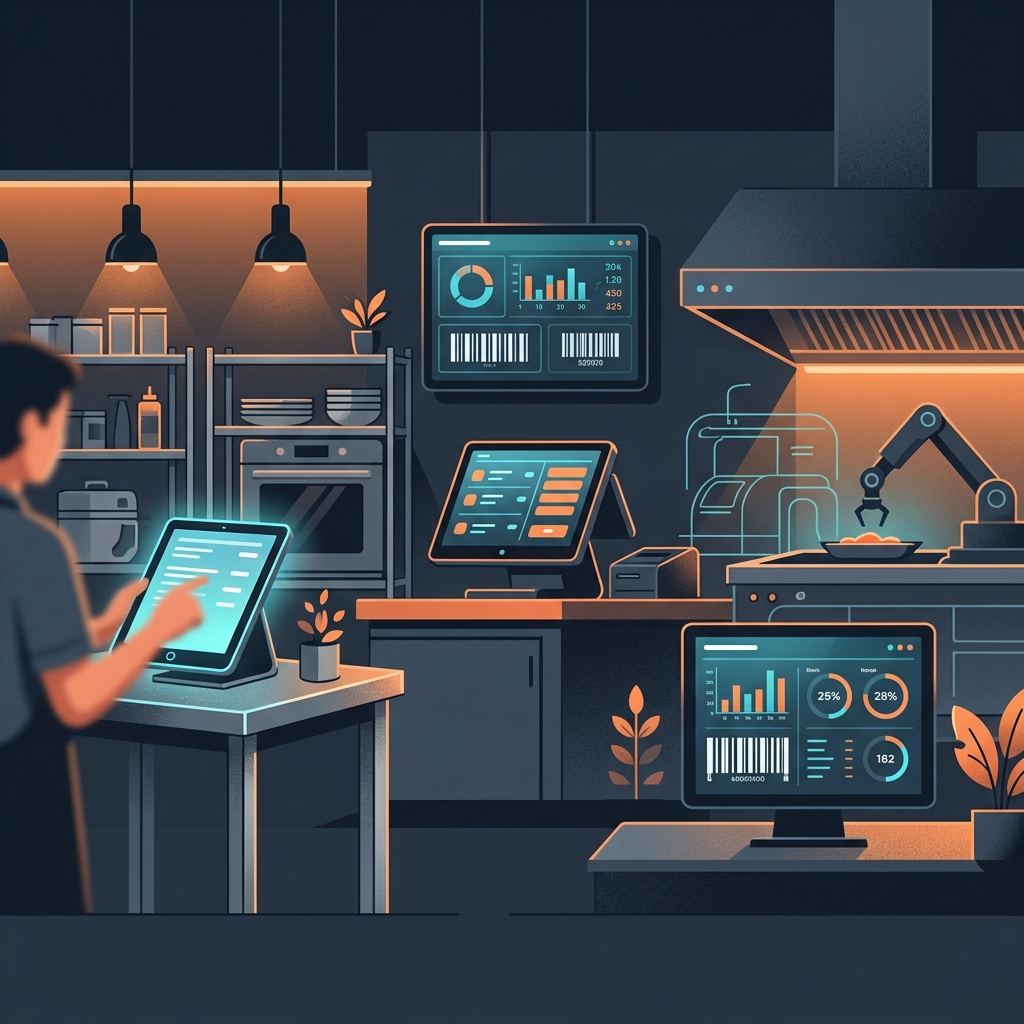
It's 7:30pm on a Friday. Your restaurant is packed. The kitchen is firing on all cylinders. And then — a GrabFood order pops up, a walk-in customer complains about a wrong order, your staff forgot to key in a dine-in table, and someone just realized the chicken stock is almost out.
Welcome to the Malaysian F&B industry. Where everything happens at once and chaos is the default mode.
But it doesn't have to be. Across KL, PJ, Selangor, and JB, a growing number of restaurant owners are quietly implementing systems that bring order to the chaos. And no, they're not spending RM200K on enterprise software. They're being smart about it.
Here's what they're doing — and what you can learn from them.
The Real Pain Points of Running F&B in Malaysia
Before we talk solutions, let's be real about the problems. If you run a restaurant, café, or food business in Malaysia, you probably deal with these daily:
Kitchen Chaos
Orders come from dine-in, GrabFood, ShopeeFood, WhatsApp, and phone calls — all at the same time. Your kitchen staff is juggling paper tickets and shouting across the room.
Stock Guesswork
You only find out you're running low on ingredients when the chef shouts "habis!" (finished). No visibility, no early warning. Just panic.
Leaking Margins
Food cost should be 30-35% but you're hitting 40%+ because of waste, wrong portions, and staff meals nobody tracks. Every sen matters in F&B.
Staff Headaches
High turnover, language barriers, part-timers who change every month. Training takes weeks and then they leave for the restaurant next door.
Sound familiar? You're not alone — these are the top challenges cited by F&B owners across Malaysia. The good news? Each one of these can be significantly improved with the right AI solution.
The 5 Areas Restaurants Are Automating
1. Order Management — From Chaos to Flow
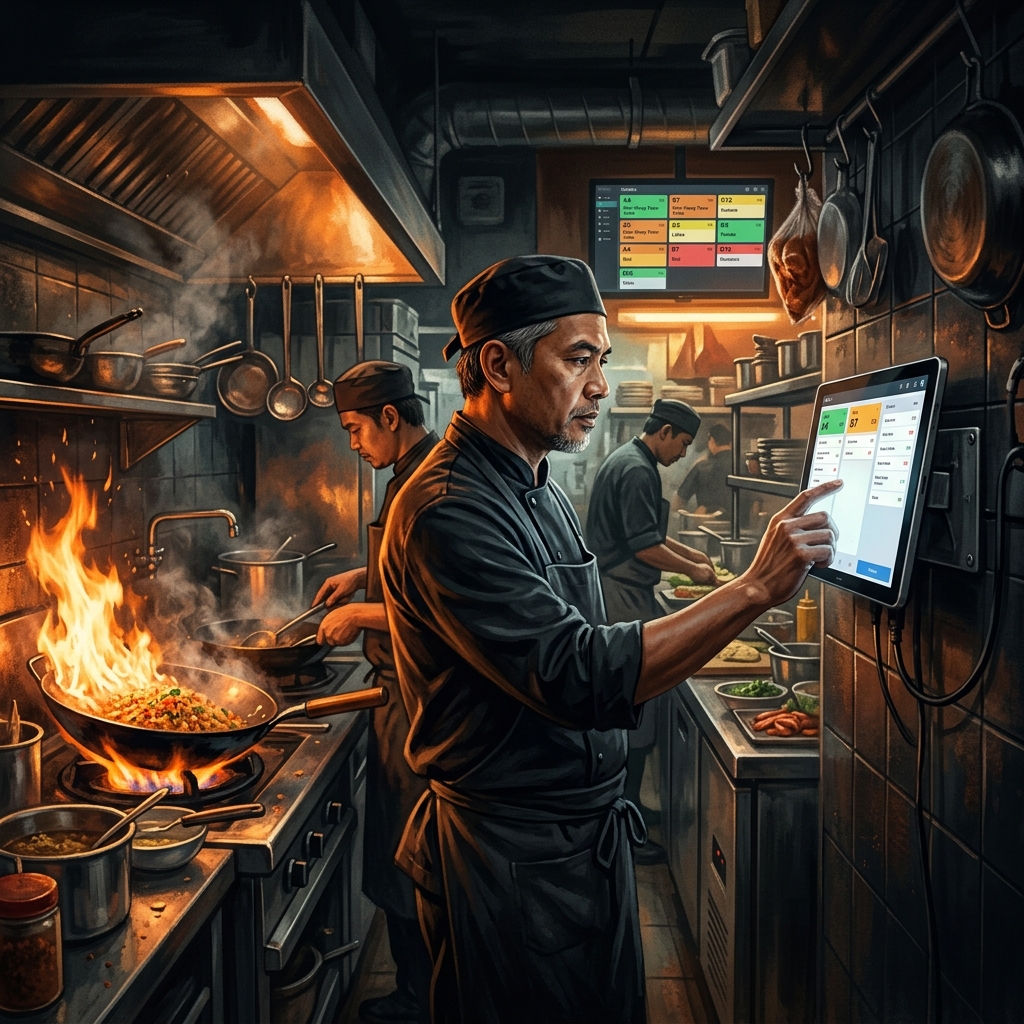
The biggest headache for most restaurants is managing orders from multiple channels. Here's what smart restaurant owners are doing:
- • Separate tablet for each delivery platform
- • Paper tickets for dine-in orders
- • Shouting orders to the kitchen
- • Manual price entry at cashier
- • No record of what was sold when
- • All delivery orders consolidated into one screen
- • Digital order tickets sent direct to kitchen display
- • Priority queue auto-sorted by time and type
- • Price, discount, and SST auto-calculated
- • Real-time sales data available on your phone
The result? Fewer wrong orders, faster preparation, and your kitchen staff can focus on cooking — not on reading messy handwriting.
2. Inventory & Purchasing — Know Before You Run Out
The #1 money-leaker in F&B is poor inventory management. Here's what the automated version looks like:
Smart Inventory in Action
One restaurant owner in Bangsar told us he was losing RM3,000-5,000 per month in food waste alone — simply because nobody tracked what went in vs. what went out. After implementing inventory tracking, his food cost dropped from 42% to 33% within 2 months.
3. Staff & Scheduling — Less Drama, More Clarity
Managing F&B staff in Malaysia is tough. High turnover, part-timers, multiple shifts. Here's how restaurants are making it smoother:
- Digital clock-in/out — No more buddy-punching. Staff scans QR code on their phone. Exact time recorded.
- Auto shift scheduling — System suggests schedules based on peak hours, staff availability, and overtime limits. Manager just approves.
- Payroll auto-calculation — Hourly rates, OT, EPF, SOCSO, tips — all calculated automatically. Payslip generated in one click.
- Performance tracking — Who's handling the most tables? Who gets the most customer compliments? Data, not feelings.
4. Customer Experience — The Silent Revenue Driver
Automation isn't just about back-end operations. It also improves how customers experience your restaurant:
QR Code Ordering
Customer scans, browses menu with photos, orders, and pays. No waiting for waiter. Popular with younger crowds.
Loyalty Programs
Auto track customer visits. 10th visit = free drink. No paper stamp cards that get lost. Integrated with payment.
Feedback Collection
Auto-send WhatsApp feedback request after meal. Catch problems before they become Google Reviews.
5. Analytics & Reporting — Make Decisions, Not Guesses
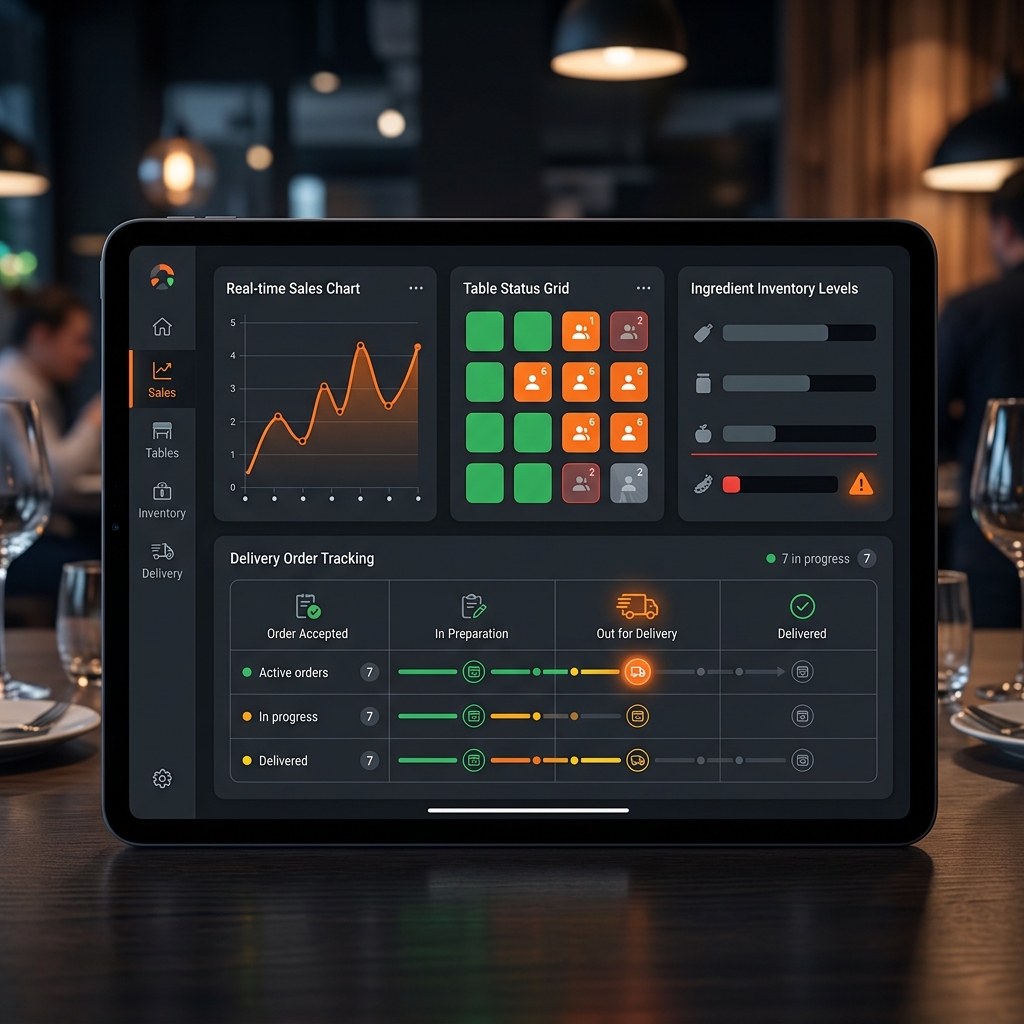
This is where the real magic happens. With proper systems in place, you can finally answer questions like:
Without data, you're making business decisions based on feeling. With data, you make decisions based on facts. That's the difference between a restaurant that survives and one that thrives.
What It Actually Costs (Real Numbers)
Let's talk money. Here's what Malaysian restaurant owners are typically investing:
F&B Automation Investment Range
Compare that to the cost of not automating: food waste alone in a medium restaurant can be RM3K-5K/month. Add wrong orders, late supplier payments, and staff overtime — you're easily looking at RM8K-12K/month in avoidable losses.
3 Restaurants That Got It Right
Here are three real patterns we're seeing across the Malaysian F&B scene:
The Noodle Shop in PJ
Single outlet, 8 staffProblem: Owner was spending 2 hours every night reconciling cash, GrabFood commissions, and dine-in bills manually.
Solution: Integrated POS that auto-reconciles all channels and generates daily cash-up report.
Result: Nightly closing reduced from 2 hours to 15 minutes. Owner finally sleeps before midnight.
The Café Chain in KL
3 outlets, 25 staffProblem: No visibility across outlets. Owner had to physically visit each location to understand what's happening. Stock transfers between outlets were tracked on paper.
Solution: Central dashboard connecting all 3 outlets. Real-time sales, stock, and staff attendance visible from one screen.
Result: Owner now manages all 3 outlets from home on weekends. Stock variance dropped by 60%.
The Catering Company in Selangor
Event-based, 12 staffProblem: Quotations were done in Word, follow-ups via WhatsApp, and there was no tracking of which events were confirmed vs. pending. Lost at least 2-3 bookings per month due to forgotten follow-ups.
Solution: Simple CRM with pipeline tracking. Auto-reminder to follow up 3 days after quotation sent. Auto-generate invoice upon confirmation.
Result: Booking conversion rate increased by 35%. Zero missed follow-ups.
The common thread? None of them tried to automate everything at once. They each identified their biggest pain point, solved it, saw results, and then expanded.
Getting Started: What to Do This Week
If you're a restaurant owner reading this and thinking "okay, I'm interested," here's what you can do this week — without spending anything yet:
For one week, write down every time you or your staff does something manually that feels repetitive. Be specific. "Staff spends 20 min copying GrabFood orders into Excel."
Rank those tasks by time wasted and money lost. Which one hurts the most? That's your #1 automation target.
Research solutions. Talk to other restaurant owners. Get a quote. Compare build-your-own vs. off-the-shelf. Make an informed decision.
The Bottom Line
The Malaysian F&B industry is evolving fast. Food delivery, rising costs, picky customers, staff shortages — the pressures are only going to increase.
The restaurant owners who will thrive aren't necessarily the ones with the best food (though that helps). They're the ones who run their business like a well-oiled machine — where every order, every ingredient, every ringgit is tracked and optimized.
You don't need to become a tech company. You just need to let AI handle the stuff that's draining your time and money — so you can focus on what you do best: feeding people good food.
This article is part of our series on business digitalization for Malaysian SMEs. If you know a restaurant owner who's struggling with the daily chaos, share this with them. A little automation goes a long way in the F&B world.